

Dr Sven Gunnar Laabs
Specialist in orthopaedics and trauma surgery, Medical Director of Physical Therapy
Contact Dr Sven Gunnar Laabs.
Book an appointmentMovement analysis allows us to assess posture, gait, the spine, pelvis, plantar pressure and muscle activity objectively. The results help us understand symptoms more precisely, plan treatment more specifically and tailor rehabilitation or training programmes to the individual.
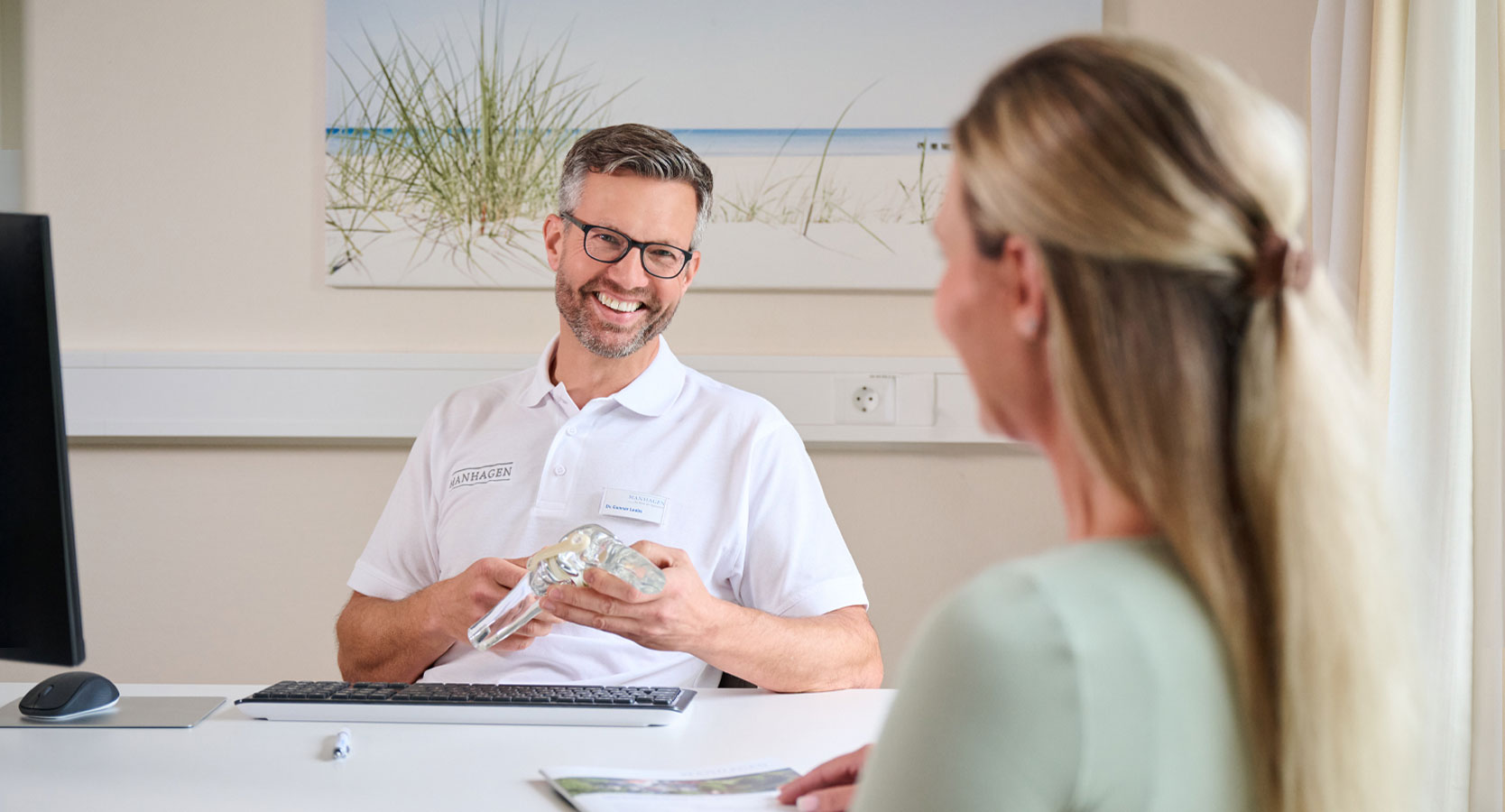
“With the introduction of the Mobility Lab, we are offering patients a new dimension in movement analysis. The system enables us to make precise diagnoses and create treatment plans tailored to the individual. For orthopaedic needs such as total knee replacement or back problems, we can not only monitor the healing process in the best possible way, but also begin targeted treatment before surgery. The combination of state-of-the-art technology and our medical expertise ensures personalised treatment designed to accelerate recovery and improve patients’ quality of life over the long term.”
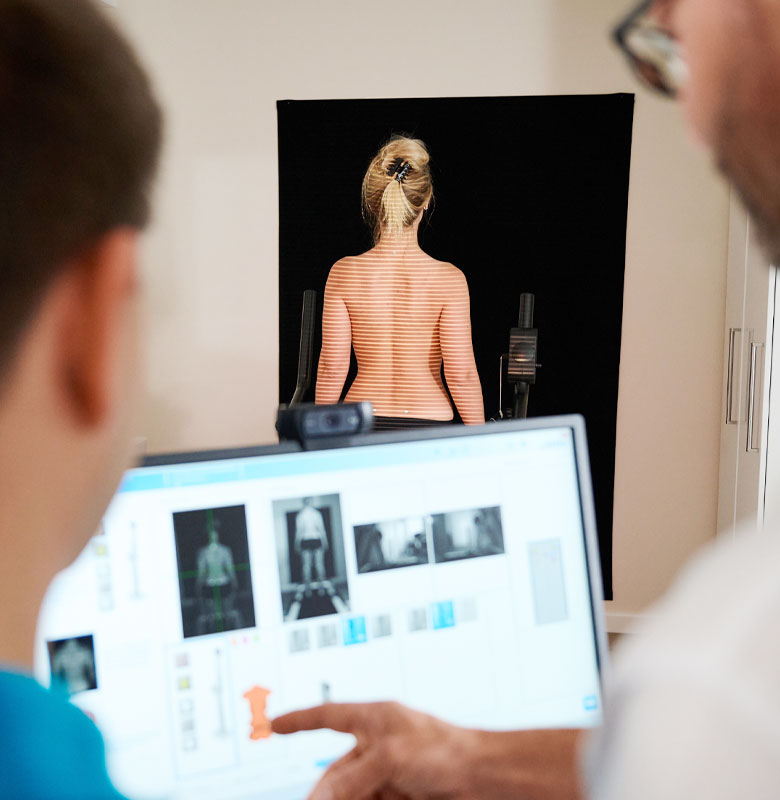
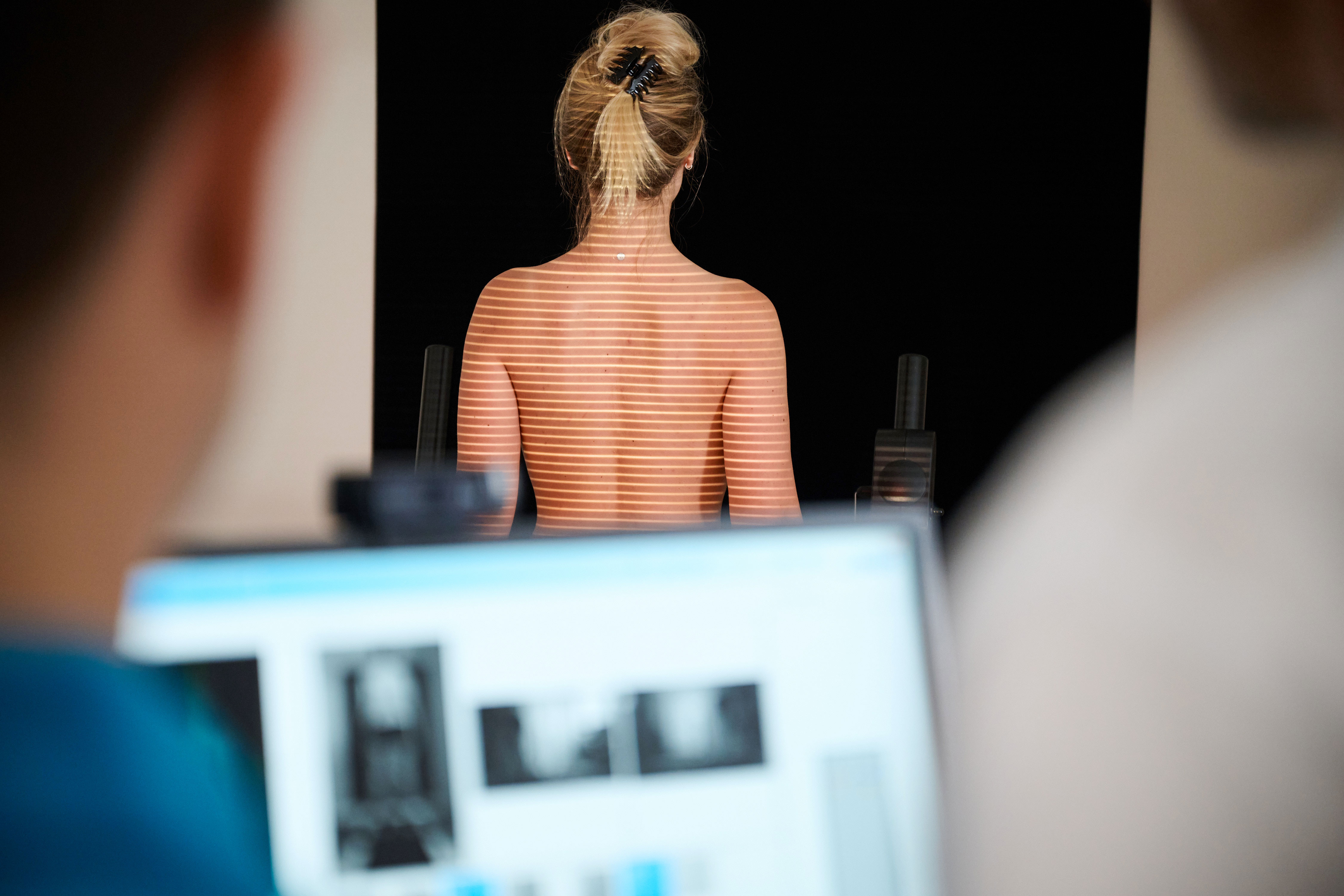
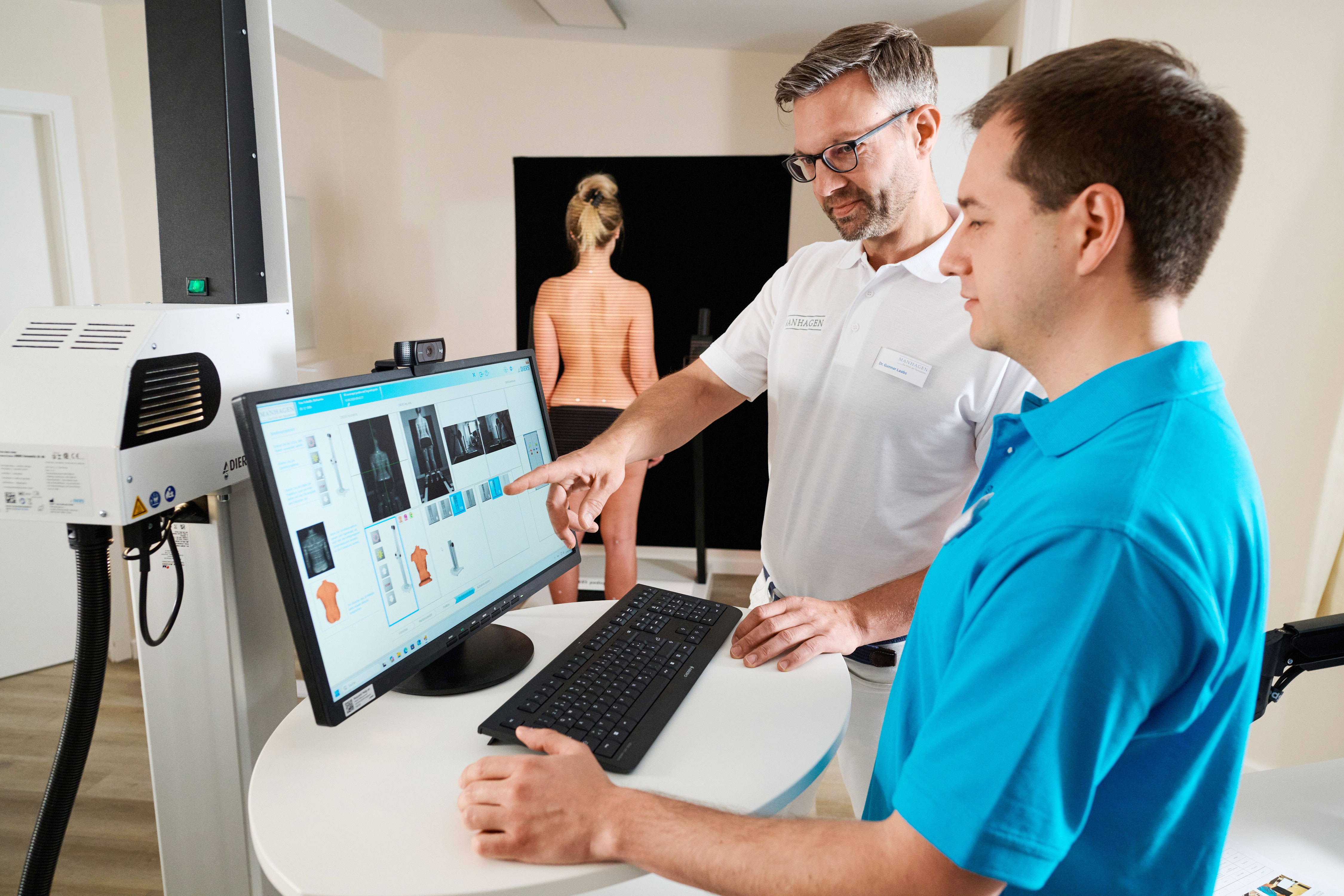
Contact-free, radiation-free assessment of the spine, pelvis, gait and overall posture.
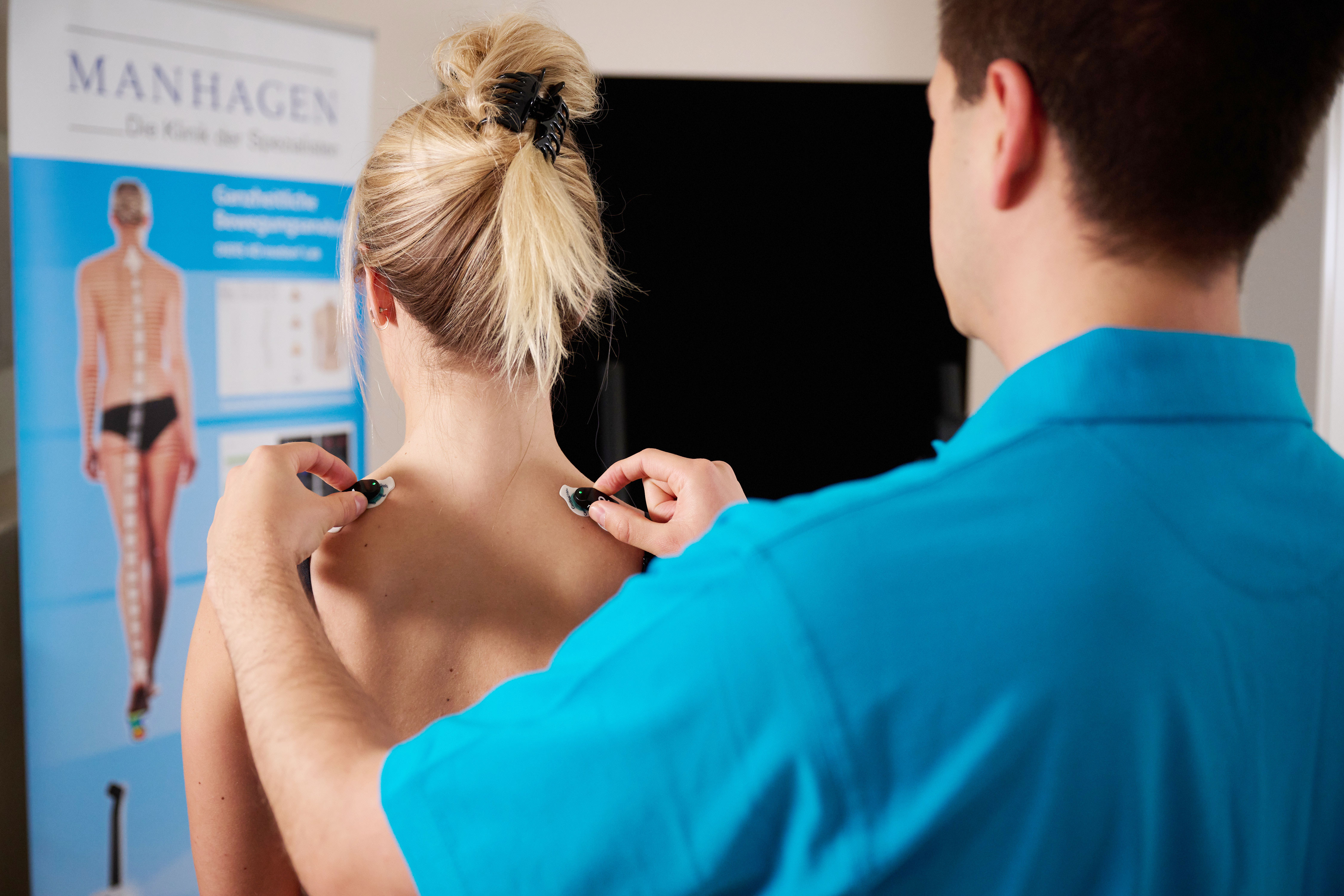
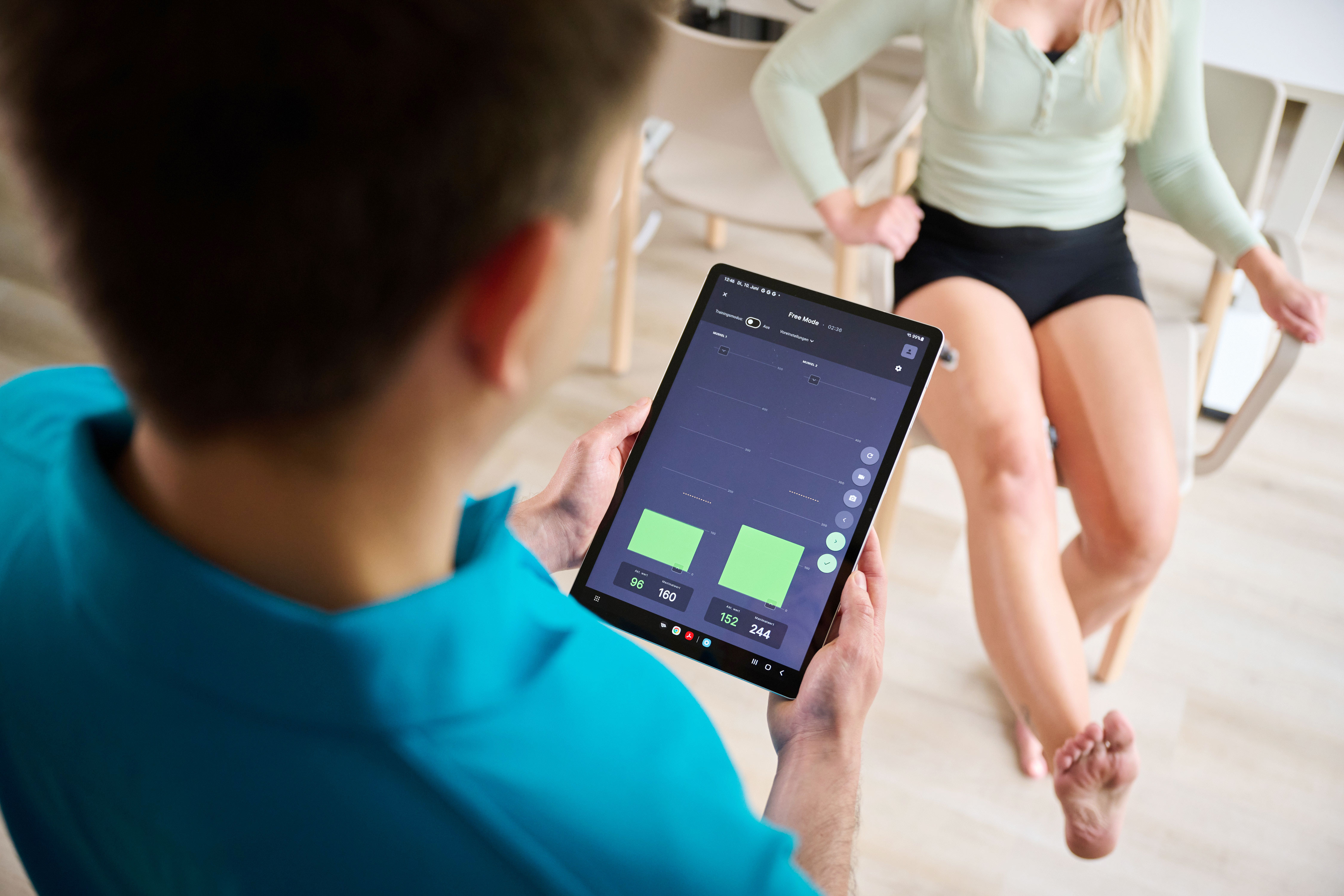
Another component of Klinik Manhagen’s expanded movement-analysis programme is EMG measurement with biofeedback technology. Small wireless sensors connected by Bluetooth, similar to ECG electrodes, record muscle activity during functional exercises. Patients receive real-time visual feedback on a tablet showing how their muscles are activated. Supported by sports science expertise, this method enables targeted activation and correction of muscular imbalances and weakness.
The feet bear the entire weight of the body and form the foundation of every movement. Even small changes in the distribution of load can affect the knees, hips and spine. Over the years, many people develop unconscious compensatory patterns, for example to avoid pain. These changes often remain unnoticed for a long time but can lead to excessive or abnormal loading.
Using a sensitive pressure plate, plantar pressure measurement allows us to determine exactly how your body weight is distributed while standing and walking. It reveals pressure peaks, uneven loading and unusual movement patterns that cannot be detected by eye. Plantar pressure measurement is therefore another component that allows us to tailor your rehabilitation more precisely to your individual needs.
For example: In one patient with osteoarthritis of the hip, the measurement may show that they have unconsciously shifted their weight onto the forefoot for years, causing abnormal loading that later also affects the ankle. In another patient with osteoarthritis of the hip, it may reveal that uneven loading through the pelvis has overloaded the spine, with the effects extending as far as the thoracic spine.
Despite undergoing the same operation, in this case a hip replacement, the therapeutic priorities during rehabilitation differ because the initial findings are not identical. Combining measurements of the spine, pelvis and leg axes with plantar pressure measurement and gait analysis makes these differences visible. This enables us to add targeted elements to standard therapy and tailor it to each patient’s personal needs.
The results can also be compared with the initial findings after surgery, showing where the programme may need further adjustment. Performing the test several weeks before surgery can provide additional benefits, but is not essential; see the section on spinal measurement, pelvic alignment and leg-axis measurement above.
Muscles control every movement and provide stability for our joints. After surgery, it is essential to reactivate and train specific muscle groups in a targeted manner. However, unconscious movement patterns often develop over many years: some muscles work too hard, while others are too weak or activate at the wrong moment.
Electromyography (EMG) allows us to measure muscle activity precisely. Small electrodes placed on the skin record when a muscle is active and how strongly it is working. A biofeedback system even allows you to watch your muscle activity on a screen in real time. This reveals which muscle groups need targeted training or movement retraining. EMG measurement is therefore an additional component that makes your rehabilitation even more individual: we can identify exactly where the muscular priorities of your therapy should lie.
For example, in one patient with a knee replacement the measurements may show that certain muscles around the joint remain inactive while others are overloaded. In another patient following shoulder surgery, they may reveal that back muscles tense at the wrong moment, causing symptoms that would have remained undetected without the measurement.
The results can also be compared with the initial findings after surgery, showing where improvements have already been achieved and where the programme may need further adjustment. Performing the test several weeks before surgery can provide additional benefits, but is not essential; see the section on spinal measurement, pelvic alignment and leg-axis measurement above.
We will be happy to assist with contact and appointment enquiries.
Email us at E-Mail anzeigen or use our contact form.
For further assessment of stability, particularly after cruciate ligament surgery or in patients with joint replacements, we also use video-based functional tests with high-resolution camera technology. These tests provide objective data on movement quality and play an important role in tailoring individual treatment.
Without contact or radiation, the system captures the spine, pelvis, gait and overall posture in motion. A combination of optical 3D/4D measurement and dynamic analysis reveals how poor posture, pelvic obliquity or deviations of the spine affect body alignment and movement. This detailed information is essential for selecting targeted treatment or training measures, particularly for back pain, osteoarthritis of the hip or knee, injuries such as cruciate ligament tears, after surgery or in cases of long-standing postural problems.
The spine connects all the major joints and plays a crucial role in posture, mobility and the distribution of load throughout the body. The interaction between the pelvis and legs has a major influence on how loads are distributed across the knee and hip joints.
Even small deviations within this system can lead to abnormal loading over time. Changes often develop over many years, sometimes without being noticed. For example, the pelvis or spine may compensate for knee problems for a long time until back pain eventually develops as well.
Modern radiation-free 3D/4D measurement allows us to assess the spine while standing, as a static measurement, and while walking, as a dynamic measurement. This reveals not only postural abnormalities but also the individual patterns your body uses to transfer and compensate for load.
Regardless of this examination, all patients receive proven, high-quality rehabilitation after surgery. Spinal measurement is an additional component that allows us to tailor your rehabilitation even more precisely to your individual needs.
For example, measurements in one patient with osteoarthritis of the knee may show that the pelvis and spine have compensated for the knee problem for years, resulting in altered posture. In another patient with osteoarthritis of the knee, they may reveal that knee pain has caused problematic misalignment of the ankles.
Although both patients receive a knee replacement, their rehabilitation programmes have different priorities, each tailored precisely to the findings. We identify these differences by combining spinal measurement with assessments of pelvic alignment and the leg axes. Alongside standardised therapy, this enables us to focus on the specific areas relevant to your individual findings.
After a few months, we can compare new measurements with the initial results. This shows what has already improved and where further targeted adjustments are needed. It provides clear answers to the question: why have some things already improved while others are not yet completely better?
If the examination can be performed several weeks before your operation, we can prepare you for the procedure even more specifically. This is a useful additional option, but it is not essential. Even if the measurement is not carried out until shortly before surgery, you still gain the same decisive benefit: rehabilitation that goes beyond the standard programme and is tailored even more closely to your personal situation.

Specialist in orthopaedics and trauma surgery, Medical Director of Physical Therapy
Contact Dr Sven Gunnar Laabs.
Book an appointment
Sports scientist
Contact Marcel Petersen.
Book an appointment