Your safety matters to us
How we protect your safety
Patient safety is our highest priority. We safeguard it through careful pre-operative preparation, close post-operative monitoring and infection control management that meets the most demanding standards.
Patient safety begins before surgery
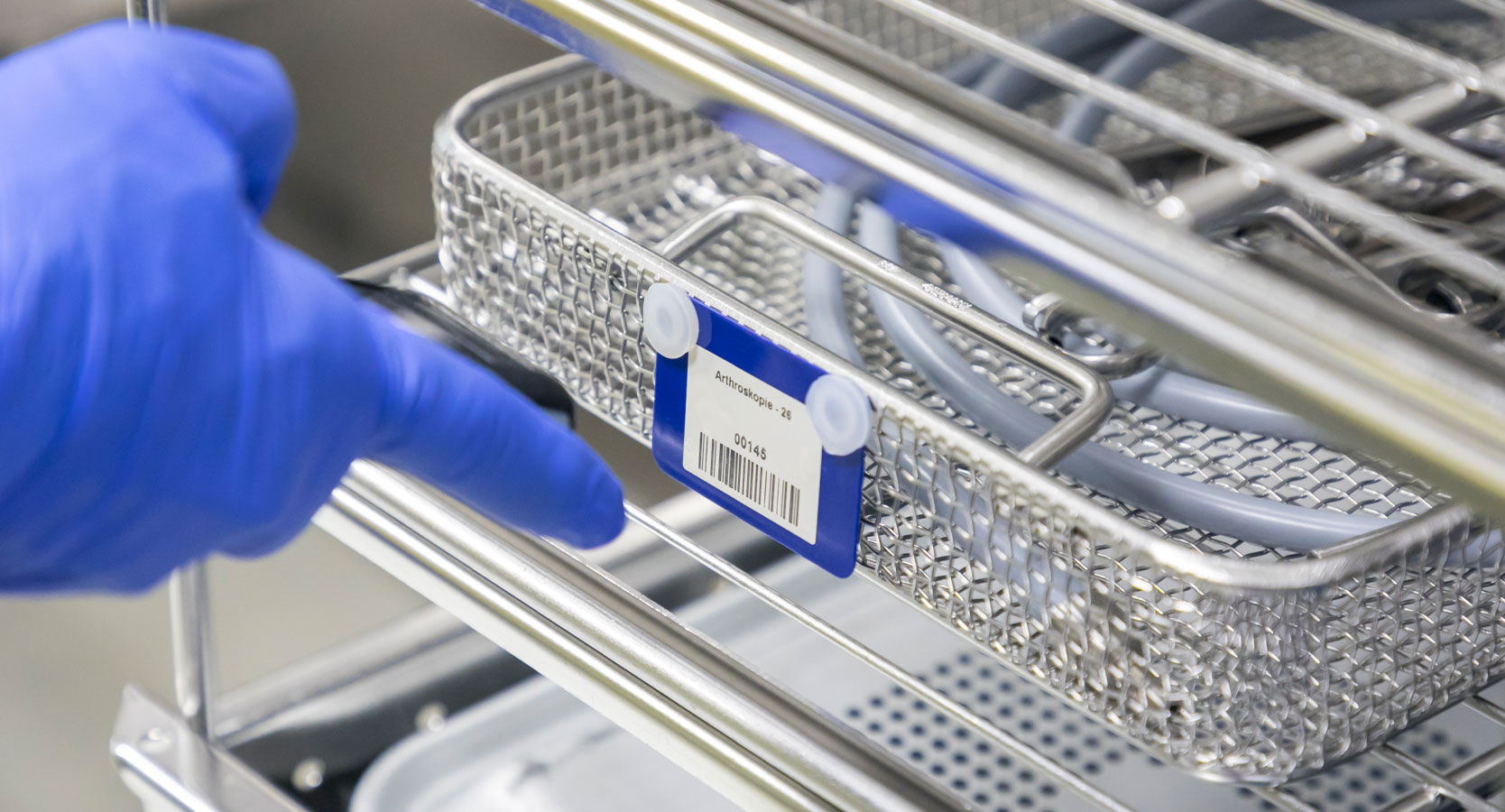
Professor Jörg Braun, Medical Director
Specialist in internal medicine, respiratory medicine, intensive care medicine, allergology and infectious diseases
“Patient safety begins before surgery. Pre-existing conditions and current medication are documented carefully. In complex cases, an anaesthetist and an internal medicine specialist assess the patient in a dedicated risk consultation. They determine whether and how the patient’s condition can be stabilised and optimised before surgery. In some cases, additional examinations can be carried out here or in cooperation with the patient’s GP. This means that we can very often perform the planned procedure at our hospital even when other medical conditions are present. Age alone plays no part in the risk assessment.”
Your treatment in safe hands
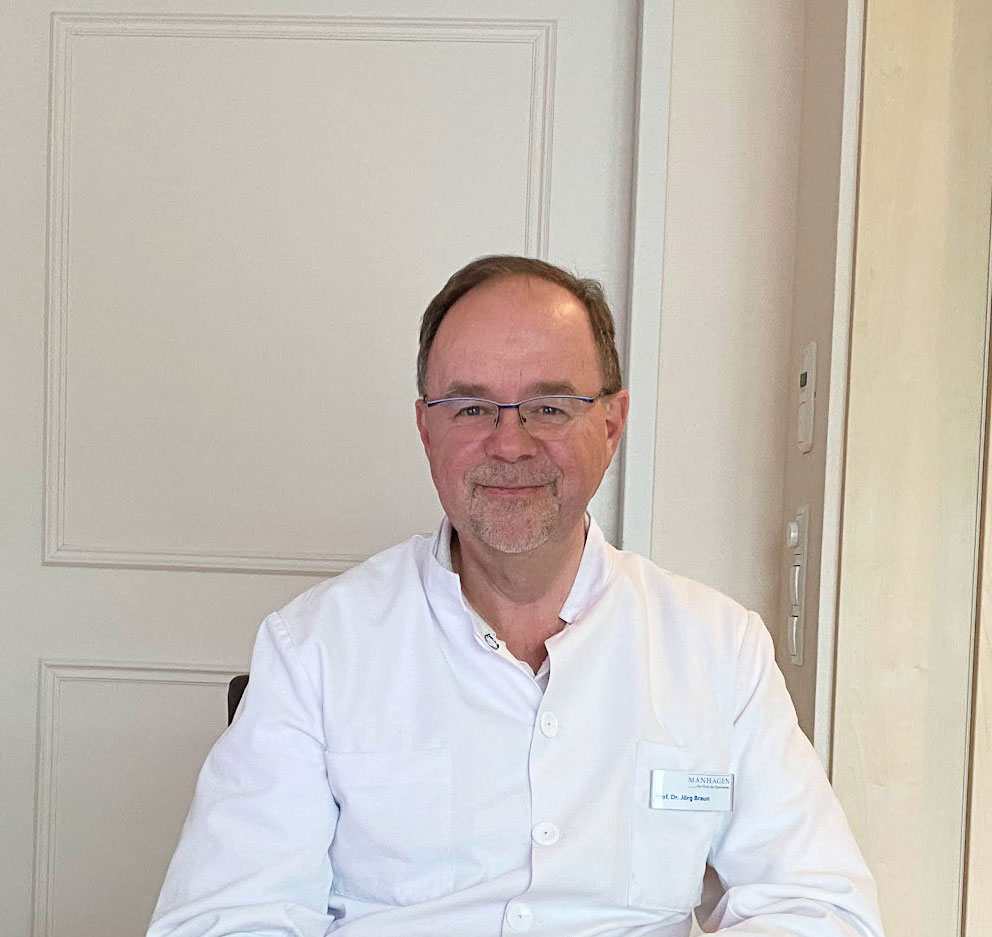
- Strict infection control and optimised wound management
- Individual risk assessment before every operation by the surgeon, anaesthetist and internal medicine physician
- Comprehensive anaesthesia consultation covering all pre-existing conditions and medication
- Modern anaesthetic techniques that minimise strain on the body
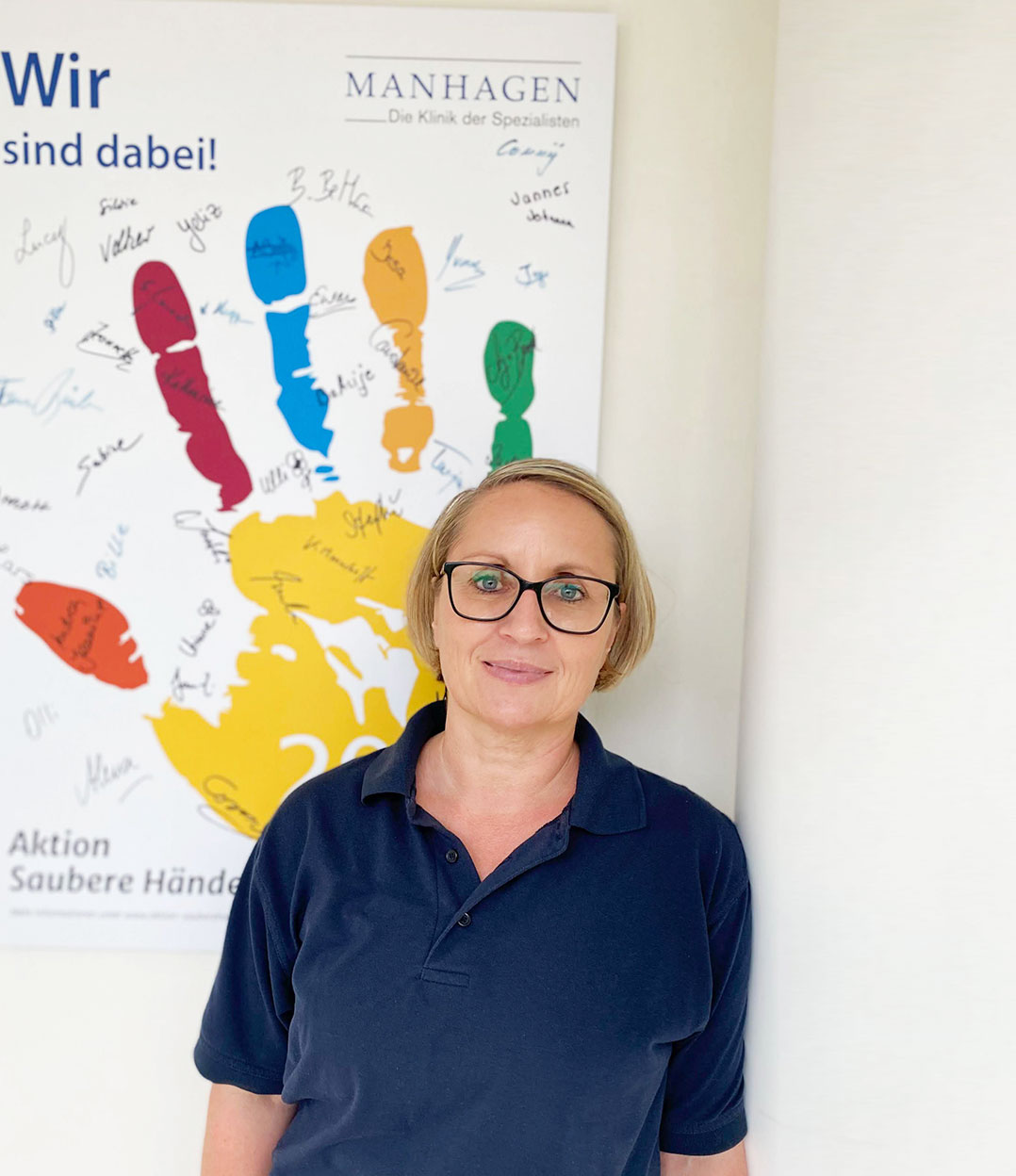
- Consistent hand hygiene and participation in the “Clean Hands” campaign
- Regular training and quality controls
- Documentation of treatment outcomes in the German Arthroplasty Registry (EPRD)
Clean Hands campaign
Klinik Manhagen takes part in Germany’s nationwide “Clean Hands” campaign every year. Through consistent hand hygiene, the initiative aims to prevent hospital infections and strengthen patient safety.
Regular training and awareness activities help our team maintain the highest hygiene standards, explains the hospital’s infection control specialist Susanne Wernecke.
Careful preparation for safe surgery
When deciding on the most appropriate treatment, our surgeons take each patient’s individual risk profile into account from the outset. The aim is to tailor treatment as closely as possible to their personal health situation.
During the subsequent pre-anaesthetic consultation, all relevant pre-existing conditions and current medication are carefully recorded and assessed. Where more complex questions arise, patients with an increased risk can also be evaluated in a specialist risk clinic by both an anaesthetist and an internal medicine specialist.
Contrary to a common assumption, advanced age alone is not a decisive risk factor. Patients over the age of 100 have already undergone successful surgery at our hospital. Relevant risk factors include severe obesity with a BMI above 35 kg/m², diabetes mellitus and serious heart or lung disease.
All patients scheduled for joint replacement surgery also undergo standard laboratory tests and an ECG. The results are assessed by a specialist in internal medicine. This means that every patient is evaluated by an interdisciplinary team comprising the surgeon, anaesthetist and internal medicine specialist before major surgery.
The purpose of this comprehensive preparation is to identify potential risk factors at an early stage and prepare patients for surgery as effectively as possible.
Where possible, we also recommend physiotherapy before surgery, known as prehabilitation. Important movements, such as walking with forearm crutches, can be practised before the procedure. This makes it easier to mobilise after surgery and supports a swift recovery.
During and after your operation
Modern anaesthetic techniques mean that anaesthesia now places very little strain on our patients. Anaesthetic plans tailored to the individual can substantially reduce possible side effects. As a result, postoperative confusion, known as delirium, is very rare at our hospital.
Where medically appropriate, many procedures can also be performed using regional anaesthesia, such as a spinal anaesthetic. For patients with certain pre-existing conditions, this can provide a gentler alternative to general anaesthesia.
After joint replacement surgery, all patients are initially monitored closely overnight. We use telemetry to monitor vital signs continuously, in a similar way to an intensive care unit. This allows heart rate, blood pressure and other important readings to be checked at all times.
This careful monitoring provides a high degree of safety during the immediate postoperative period.
Consistent infection prevention and control is a central element of our treatment quality. The rate of postoperative wound infections at our hospital is well below 1 per cent. We achieve this through comprehensive hygiene standards, continuous staff training and wound-management procedures optimised in line with the latest medical evidence.
For us, infection prevention begins before surgery. Patients are screened for possible MRSA colonisation at an early stage, for example using a nasal swab. This enables any necessary measures to be initiated promptly, further reducing the risk of infection.
Consistent hand hygiene plays a particularly important role. Among other measures, we promote it through our regular participation in the nationwide German Clean Hands Campaign, which represents the highest standards of hygiene in healthcare.
To document the long-term quality of our joint replacement procedures transparently, we have also worked with the German Arthroplasty Registry (EPRD) for many years. Its evaluations confirm the consistently high and sustainable quality of care we provide to our patients.
MRSA: no chance for hospital germs!
More than 15,000 people in Germany contract dangerous hospital-acquired pathogens every year, including methicillin-resistant Staphylococcus aureus, or MRSA. We were one of the first hospitals to introduce voluntary MRSA screening for staff and carry out extensive screening of patients for resistant pathogens.
Pathogens can spread quickly through physical contact and by touching door handles and other objects. Around 80 per cent of illnesses are transmitted by our hands. Thorough hand disinfection eliminates 99.9 per cent of pathogens. Klinik Manhagen therefore provides numerous hand-sanitiser dispensers for patients and visitors. You can help too.
Our Medical Director, Prof. Jörg Braun, is a nationally recognised specialist in infectious diseases and their prevention. Under his leadership, our specially trained staff carry out close monitoring to ensure compliance with our high hygiene standards. Regular participation in the WHO Clean Hands Campaign involves the entire hospital team in hand hygiene.
Patient safety and quality management
German Arthroplasty Registry (EPRD)
Manhagen was one of the first hospitals to participate voluntarily in routine data collection for the German Arthroplasty Registry (EPRD) and is represented on its Executive Committee as an advisory project partner. The aims are quality assurance, continued development through independent outcome monitoring and comparison with other hospitals performing joint replacement surgery.
CIRS: safety principles from aviation
CIRS, the Critical Incident Reporting System, allows hospital employees to report safety-related incidents anonymously. Corrective measures can then be introduced and similar errors prevented in the future. CIRS is based on principles and concepts from aviation and, with its demanding safety requirements, goes well beyond the standard legally required of medical facilities.
IMC: Intermediate Care
To enhance patient safety, our Intermediate Care beds provide an additional level of care. Patients can be admitted to this specialist area for short-term, closer and continuous monitoring, for example if they are not yet stable enough to transfer to a standard ward after surgery.
Measurable quality
Case numbers, awards, quality reports and patient satisfaction show the standards against which we measure ourselves.

Direct contact
22927 Großhansdorf
Weekends: 09:00 to 17:30
Public holidays: 09:00 to 15:00
- Orthopaedics & surgery
- 04102 605-0
- MVZ Manhagen (practice)
- 04102 605-350
- Trauma Clinic/emergency service
- 04102 605-358
- Anaesthesia
- 04107 - 3399860
- Eye Clinic
- 04102 605-228
- Fertility Centre
- 04102 777 686-0