
Steffen Baron
Specialist in orthopaedics
Contact Steffen Baron.
Both acute injuries and degenerative conditions such as osteoarthritis commonly affect the knee joint. Accurate diagnosis is essential for successful treatment. On this basis, we decide with you whether conservative treatment or surgery is appropriate. Our aim is to find the best possible treatment for your individual needs, helping to maintain the long-term function and resilience of your knee.
Correction of leg axis malalignment
Specialised, modern joint replacement surgery
Individual treatment based on the underlying cause
Securing stability and function
Preserving healthy meniscal tissue to maintain your mobility
Correction of instability and maltracking
For every surgical procedure, the basic principle is to preserve as much healthy tissue as possible. In joint replacement surgery in particular, even the best implant cannot match the patient’s own joint. A gentle procedure that follows this principle is partial knee replacement, also known as a unicompartmental knee replacement. Only the damaged part of the joint is replaced, while the cruciate ligaments are preserved.
At Manhagen, around 50% of knee replacements are partial replacements, compared with only around 5% across Germany. The procedure is technically demanding and requires particular expertise and skill from the surgeon. At the same time, the hospital receives lower reimbursement than for a total knee replacement. Manhagen’s highly qualified surgeons have the freedom to select the procedure that is medically best for each patient.
Despite the good durability of modern implants, a joint replacement may eventually need to be revised, particularly as life expectancy rises. This requires specialist knowledge and particular surgical skill. During revision surgery, the aim is to remove only the old implant wherever possible without damaging the existing bone.
The surgeon must respond to the findings encountered during the operation to secure the new implant in the best possible way. Manhagen’s surgeons have the technical skill and experience this demands.
Specialist in orthopaedics
Contact Steffen Baron.
Specialist in orthopaedics and trauma surgery, specialised orthopaedic surgery; Chief Physician
Contact Drs. (NL) Genio Bongaerts.
Specialist in orthopaedics and trauma surgery
Contact Dr Matthias Buhs.
Specialist in orthopaedics and trauma surgery, manual therapy/chiropractic therapy
Contact Arne Demming.
Specialist in orthopaedics and trauma surgery, general surgery, specialised trauma surgery and sports medicine; Chief Physician
Contact Dr Matthias Gebhardt.
Book an appointment
Specialist in orthopaedics and trauma surgery, specialised orthopaedic surgery
Contact Dr Michael Grande.
Specialist in orthopaedics and trauma surgery, specialised orthopaedic surgery; Chief Physician
Contact Dr Niels Hellmers.
Specialist in orthopaedics and trauma surgery, knee surgery and sports medicine; Chief Physician
Contact Dr Jan Hennings.
Specialist in orthopaedics; Chief Physician
Contact Dr Udo Hessling.
Book an appointment
Specialist in orthopaedics and trauma surgery, specialised trauma surgery; ATLS provider
Contact Dr. Hinrich Heuer.
Book an appointment
Specialist in orthopaedics and trauma surgery
Contact Senior Physician Dr Andreas Hüschelrath.
Book an appointment
Specialist in orthopaedics and trauma surgery, sports medicine and specialised orthopaedic surgery; Chief Physician
Contact Nils Kerwer.
Specialist in orthopaedics and trauma surgery, specialising in hip and knee replacement and robotic surgery
Contact Sebastian Krüsemann.
Specialist in orthopaedics; Chief Physician
Contact Dr Geert Lewing.
Specialist in orthopaedics and trauma surgery, surgery and specialised orthopaedic surgery; Chief Physician
Contact Dr Roel van der Most.
Specialist in orthopaedics and sports medicine
Contact Dr Wolf-Peter Niedermauntel.
Specialist in orthopaedics and trauma surgery, specialised orthopaedic surgery and manual medicine
Contact Stefan Riggert.
Specialist in orthopaedics and trauma surgery, manual medicine/chiropractic therapy and emergency medicine; certified foot surgeon
Contact Matthias Roggelin.
Specialist in orthopaedics and trauma surgery
Contact Johannes Sandloff.
Specialist in orthopaedics and trauma surgery
Contact Dr Jon Schäfer.
Specialist in orthopaedics and trauma surgery
Contact PD Dr Tobias Schmidt.
Book an appointment
Specialist in orthopaedics and trauma surgery
Contact Thorsten Siemssen.
Specialist in orthopaedics and trauma surgery
Contact Dr Florian Stuber.
Specialist in orthopaedics, emergency medicine and manual medicine/chiropractic therapy
Contact Harald Uphus.
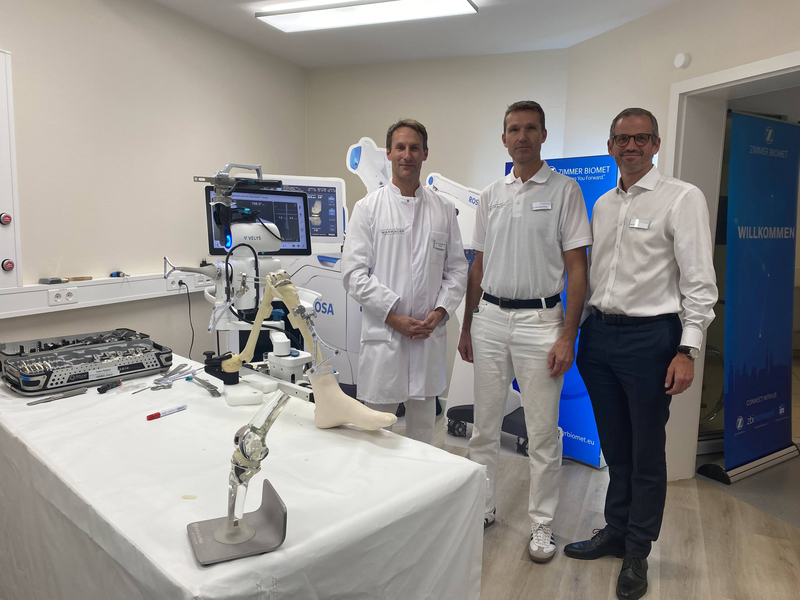
At Klinik Manhagen, we use state-of-the-art robot-assisted technology to make surgery even more precise, safe and gentle. In knee replacement surgery in particular, robotics enables precise planning and execution tailored to each patient’s individual anatomy.
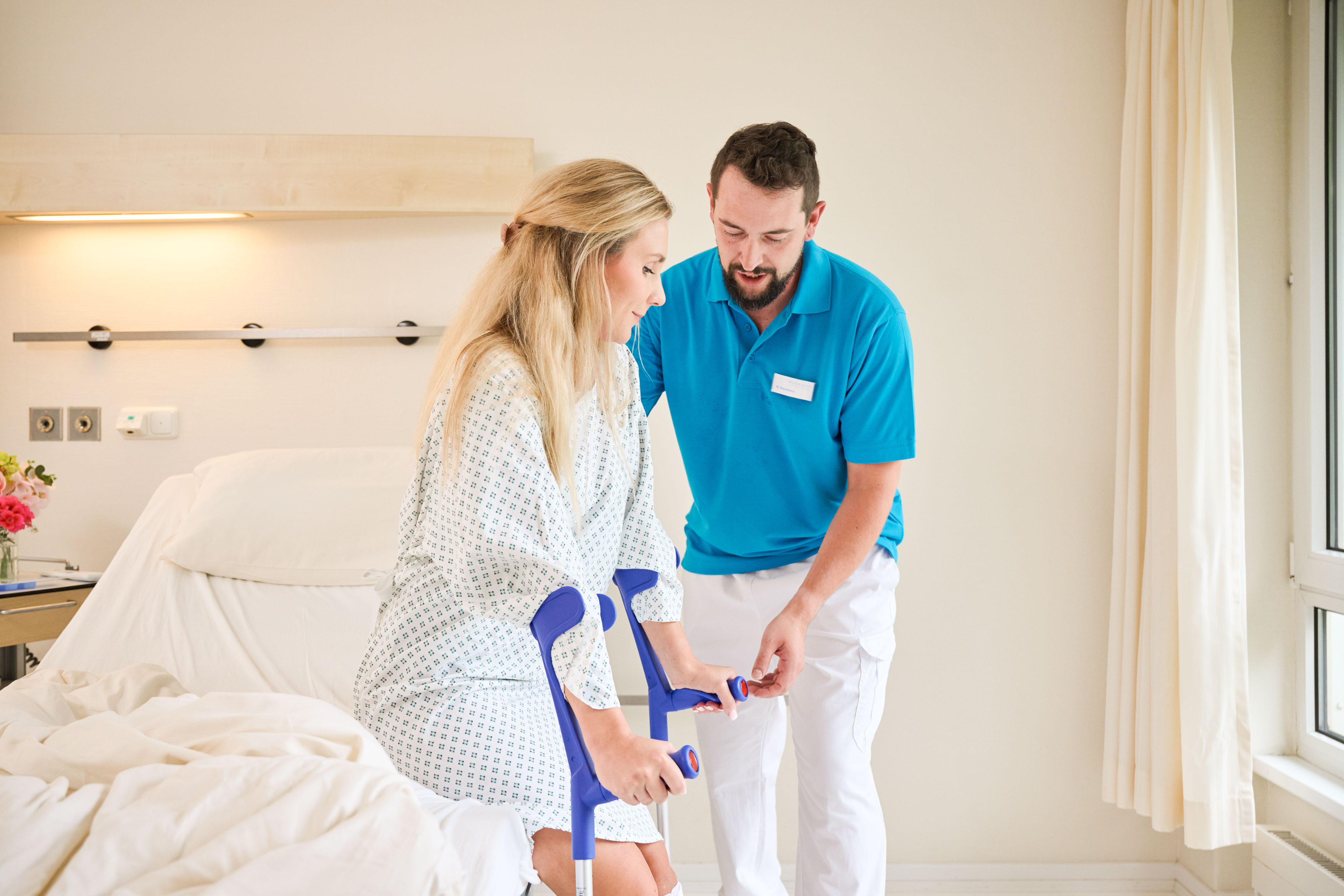
Rehabilitation begins early and supports a safe return to everyday life and sport.
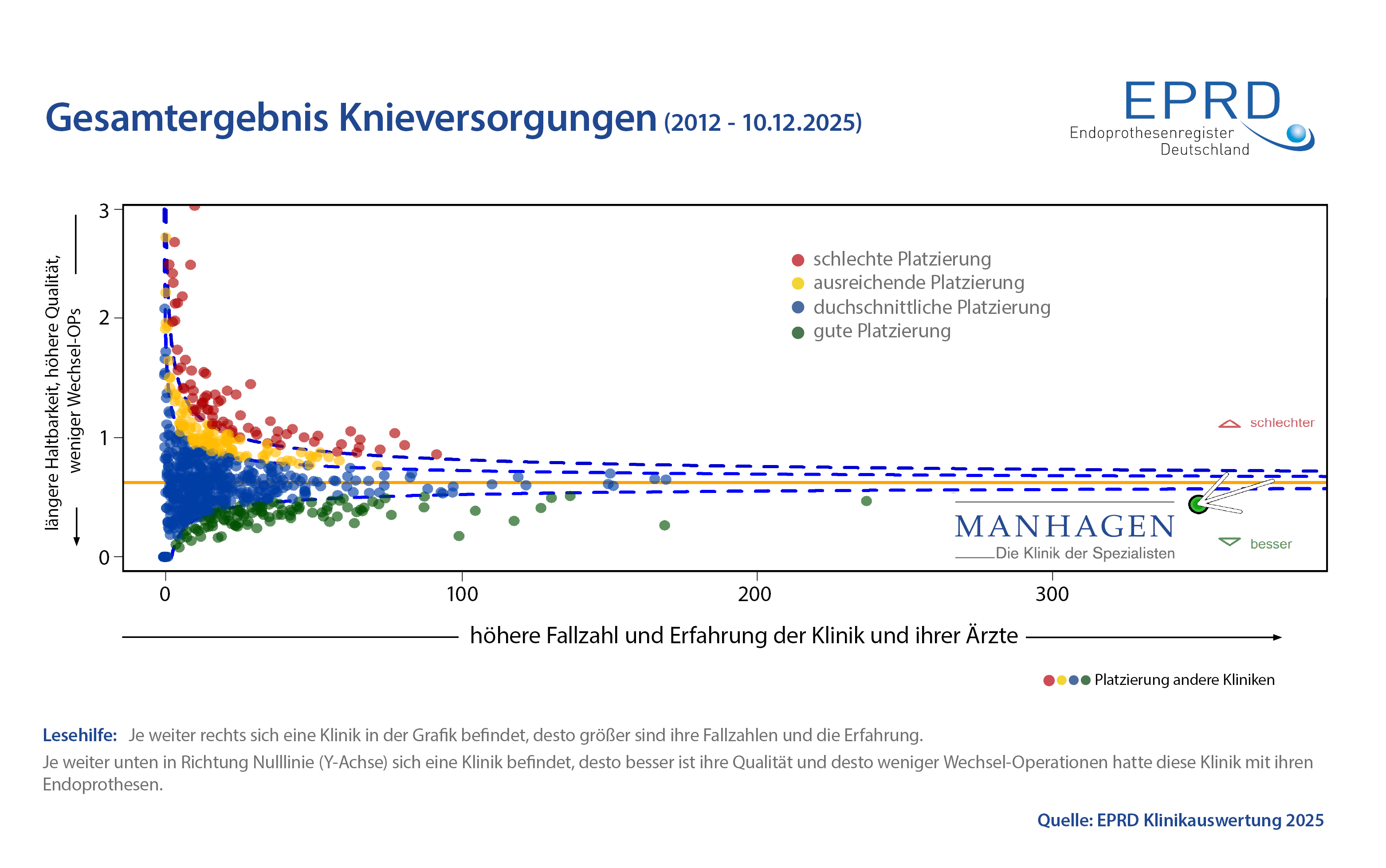
Case numbers, awards, quality reports and patient satisfaction show the standards against which we measure ourselves.


Knee replacements in 2025

Operating theatres

Recommendation rate 2025
A tear of the anterior cruciate ligament is one of the most common injuries in sport and leisure activities. A range of techniques has become established over recent decades to restore stability to the knee and prevent premature joint degeneration. These generally replace the torn ligament with one of the patient’s own tendons. Dr Jan Hennings of Klinik Manhagen in Großhansdorf explains that there is another approach. He reconstructs the original cruciate ligament, preserving the joint’s natural characteristics as fully as possible.
Dr Hennings, why do we need the cruciate ligament?
Dr Hennings: The cruciate ligament ensures that the thigh bone and shin bone can move against one another only within very narrow limits. When it tears, the knee loses stability and develops what is known as the drawer sign. If this instability is not corrected, it usually affects more than walking. Over the long term, it also causes wear of the articular cartilage and therefore osteoarthritis of the knee. In the past, surgery was often recommended only for athletes because of the joint’s reduced function. Today, reconstruction is generally the aim.
Most patients today undergo cruciate ligament reconstruction: the torn ligament is removed and replaced with a graft from the patellar, hamstring or quadriceps tendon. You repair the torn ligament instead. How does that work?
Dr Hennings: With the technique we use, the ligament is repaired arthroscopically. This keyhole method, requiring only a few small incisions, is adapted from shoulder surgery. A woven suture is passed through the stump of the torn ligament, which is then reattached at its anatomical centre using bone anchors measuring only 4.5 mm. We also stimulate the ligament stump to encourage stem cells to migrate into the defect, helping the repair to become integrated with new tissue as quickly as possible. This principle is already familiar from the “healing response” technique. In that procedure, however, the torn ligament is not sutured but simply placed in its anatomical position while the leg is immobilised in extension with a brace. This is not necessary with the method we use.
What are the advantages of this approach?
Dr Hennings: Because we do not replace the cruciate ligament, the synovial sheath around it, including all its blood vessels and proprioceptors, is preserved. Patients retain their intuitive coordination and reaction ability, which otherwise has to be retrained with considerable effort. Following conventional cruciate ligament reconstruction, elite athletes in particular need a long period of training to return to their previous form, partly because of this “learning phase”. By contrast, most patients treated with our repair technique report that the knee feels “like it used to” after only a short time and that they do not experience uncertainty in everyday life. Another advantage is substantially faster rehabilitation than after cruciate ligament replacement. Sporting ability is usually restored after only six months. With other techniques, bony integration can take up to a year and complete synovial healing of the graft up to two years.
Which patients are suitable for this procedure?
Dr Hennings: We assume that, in the best-case scenario, between...
Some knee procedures can be performed as outpatient surgery. Whether this is appropriate depends on the procedure, any underlying conditions and the support available at home.
The menisci are two crescent-shaped discs of cartilage in the knee. They act as shock absorbers between the upper and lower leg, stabilise the joint and protect the cartilage. They are therefore essential for smooth, pain-free movement.
A meniscal tear can have different causes:
Because degenerative damage often develops gradually, accompanying cartilage damage is not uncommon.
Typical symptoms of meniscal damage include:
Warning signs include:
These symptoms may indicate a bucket-handle tear, which should be treated promptly.
Treatment depends on the type and extent of the damage:
A degenerative meniscal tear can often initially be treated without surgery, for example with:
If symptoms persist, the knee locks or the tear is extensive, arthroscopic surgery may be appropriate.
During the procedure, the meniscus is:
The guiding principle is that preserving the meniscus has the highest priority because it performs an important protective function in the knee.
During our knee surgery consultation, we provide comprehensive advice on the treatment options suitable for you. Our aim is to relieve pain, preserve knee function and prevent further damage.
The cruciate ligaments form the central pillar of the knee joint and are essential to its stability. Injuries to the posterior cruciate ligament are rare, whereas a tear of the anterior cruciate ligament, or ACL, is one of the most common ligament injuries.
The injury typically occurs during sports such as football, skiing or tennis. Common mechanisms include twisting the knee while the foot remains firmly planted or a direct force, for example from another player.
Associated injuries frequently affect the menisci and collateral ligaments. The combination of an anterior cruciate ligament tear with injuries to the medial collateral ligament and medial meniscus is known as the unhappy triad.
Once the acute pain and swelling have subsided, instability of the knee joint is generally the main problem. A typical symptom is known as giving way, when the knee suddenly buckles and may cause renewed pain or a fall.
This instability:
Treatment is selected according to the patient’s age, activity level and individual requirements:
The standard surgical treatment is ACL reconstruction. A tendon graft from the patient’s own body is used, usually:
The graft is anchored through small bone tunnels in the knee and takes over the function of the original cruciate ligament. The procedure is performed arthroscopically using minimally invasive techniques. Associated meniscus or ligament injuries can be treated during the same operation.
Repeat tears and recurrent instability present a particular challenge. In these cases, a two-stage procedure is often required:
1. The existing bone tunnels are filled with bone graft
2. Once the bone has healed, after approximately four months, a new ACL reconstruction is performed
Additional procedures to stabilise the structures at the sides of the knee are also often necessary.
Our specialist knee surgery clinic provides advice based on the latest scientific evidence. Our aim is to restore the stability, function and load-bearing capacity of your knee as fully as possible.
It is useful when symptoms occur under load, leg alignment or gait is abnormal, or treatment needs to be planned more precisely.
For certain procedures, technology can assist with planning and implementation. The aim is more precise positioning and a controlled surgical process.
Key areas include cruciate ligament injuries, meniscus damage, cartilage conditions, osteoarthritis and symptoms following sports injuries or accidents.
No. The decision depends on the findings, stability, pain, mobility and your personal needs. Conservative options are always considered.